Frequently Asked Questions
Got questions about the 100% Profit for Good business model, our vetting standards, or verified badges? Find your answers here.
General
Profit 4 Good refers to a commercial business model structured so that 100% of net profits directly serve a charitable purpose, rather than enriching private owners or shareholders. To learn more about our core philosophy, visit our What is Profit 4 Good? page.
To be listed as a verified Profit 4 Good Business in our directory, an entity must satisfy two core structural requirements:
- Distinct Business Entity: It must operate as a standalone, registered commercial business or company - selling goods or services under its own commercial identity - rather than trading directly under a charity, trust, or foundation banner. (Note: The business may still be owned by a parent charitable trust or foundation).
- 100% Charitable Profit Commitment: Exactly 100% of the net profits generated by the business must be directed toward charitable purposes.
For a detailed breakdown of our verification standards, explore our Profit 4 Good Criteria page.
The Charitable Ownership Advantage (COA) refers to the unique business and marketing edge gained by companies that commit 100% of their net profits to charitable purposes. When businesses clearly communicate this 100% impact model at checkout and across their branding, it builds deep customer trust, increases checkout conversion rates, and drives long-term brand loyalty.
To explore how purpose drives higher sales and customer retention, read our article: The Checkout Advantage: Turning 100% Purpose into Sales.
There are many fantastic ways businesses act ethically, minimize environmental impact, and give back to communities - including B Corp Certification (which balances profit and purpose across general operations), Buy One, Give One programs, and traditional corporate philanthropy.
While we celebrate all ethical models, our directory is strictly focused on businesses with a 100% Profit for Good commitment. This means 100% of net profit is directed towards charitable purposes with zero shareholder dividends paid out. Businesses that donate partial profits or operate under standard private shareholder structures do not qualify.
No. Charities, trusts, and non-profits frequently sell goods or services (such as fundraising merchandise, op shops, or event tickets) to raise revenue for their mission. While this is wonderful and creates vital impact, our directory specifically features distinct businesses structured entirely as 100% profit-for-good entities. If a charity does not operate a distinct commercial business identity, it falls outside our directory scope.
Directory Submissions & Verification
Submitting your business is quick and straightforward. Head to our Apply Page to fill out the submission form with your company details, business model information, and proof of your 100% charitable profit commitment. Our team will review your application to confirm it meets our criteria.
Unverified listings are created when a business fits the 100% Profit 4 Good model, but our team has not yet completed a formal review of its profit lock structure or ownership documentation. To claim your listing and upgrade your status to Verified, visit our Apply Page and select the option to verify an existing listing. Once our team confirms your documentation, your status will be updated immediately.
The Profit 4 Good Verified Badge is an embeddable badge designed for display on your website. It gives customers instant, third-party confirmation that 100% of your net profits go directly to charitable purposes.
If you have a business that is featured in our Profit 4 Good Directory (and the status is listed as "Verified") you can go download your customisable Badge Code to embed on your website. Displaying an ethical trust badge at checkout significantly boosts buyer confidence, lowers cart abandonment, and increases conversion rates.
Profit 4 Good Business Models
Businesses achieve a 100% profit-for-good model through various structural pathways. The primary models featured in our directory include:
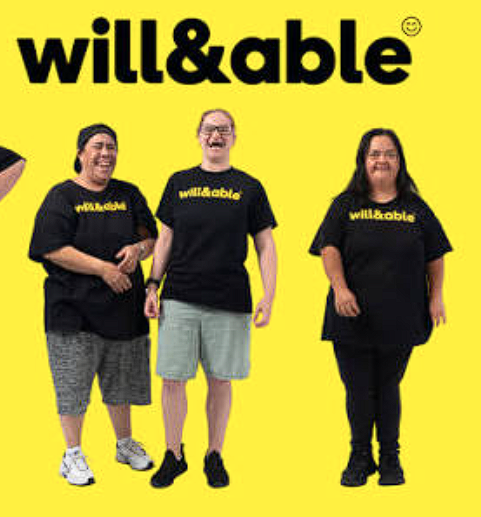
The Charity-Owned Company
A commercial business that is 100% owned by a registered charitable trust or foundation. All net profits generated by the business flow into the parent trust to fund its mission or maintain a legal asset lock.
Example: Will & Able (manufactures eco-friendly cleaning products while owned by a charitable trust to create jobs for people with disabilities).

The Standalone Social Enterprise Model
An independent commercial business (not owned by a charity) that reinvests 100% of its net profits directly back into its internal operations, machinery, fair wages, or specialized employment for marginalized communities.
Example: The Loyal Workshop (crafts premium leather goods to provide fair employment, mental healthcare, and medical support for women exiting the commercial sex trade).
The Profit-Donation Model
An independent business structured to donate 100% of its net profits to external partner charities and environmental causes.
Example: Worn for Good (a circular fashion platform that donates 100% of net profits to charitable partners focused on community and environmental restoration).
Yes. From cooperative asset locks to hybrid corporate structures, businesses utilize several legal frameworks to guarantee 100% impact. For a complete breakdown, explore our Profit 4 Good Business Models page.
Have another question?
Our team is here to help clarify business models, verification processes, or embedding trust signals.
Get in Touch