Effective Altruism in Business: Maximizing Commercial Impact
Applying rigorous, evidence-based reasoning to find the most effective ways to help others through corporate governance.

Effective Altruism (EA) is a project that uses evidence and reason to figure out how to benefit others as much as possible, and taking action on that basis. While historically focused on career choices and personal donations, EA is increasingly influencing corporate structure and business ethics.
Peter Singer's Intellectual Groundwork
Australian moral philosopher Peter Singer laid much of the core intellectual groundwork for the Effective Altruism movement, notably through his influential 1972 essay Famine, Affluence, and Morality and his 2009 book The Life You Can Save: Acting Now to End World Poverty.
In his writing, Singer introduces his famous Drowning Child Thought Experiment: if you walk past a shallow pond and see a child drowning, you would ruin an expensive pair of shoes to save them. Singer argues that if we would easily make that sacrifice to save a child right in front of us, we have a moral obligation to make comparable sacrifices to save distant lives via efficient, transparent overseas charities. This thesis calls on individuals to systematically evaluate how their resources - including their commercial enterprises - can prevent suffering and expand the moral circle to address global poverty, animal welfare, and existential risks.

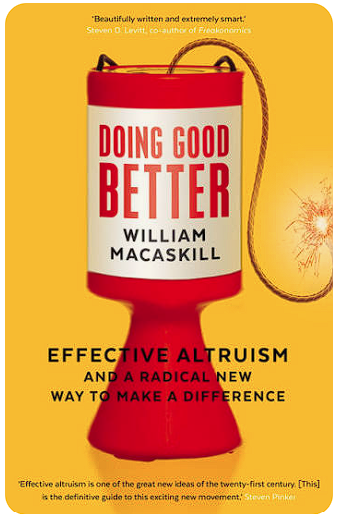
William MacAskill and "Doing Good Better"
Expanding on Singer's moral foundation, philosopher William MacAskill co-founded key EA institutions and published the defining book Doing Good Better: How Effective Altruism Can Help You Make a Difference. MacAskill's work helped transition Effective Altruism from a moral philosophy into a practical, data-driven movement.
Rather than relying on good intentions, MacAskill introduces frameworks to evaluate interventions based on scale, neglecteddness, and tractability. This encourages donors and businesses to focus on areas where a single dollar can make the largest statistical difference, such as providing insecticide-treated bed nets or deworming treatments, rather than funding highly publicized but less cost-effective local projects.
Core Principles of Effective Altruism
The movement centers on several guiding principles:
- Maximizing Impact: Using careful research to find interventions that save or improve the highest number of lives per dollar spent.
- Impartiality: Recognizing that a life saved has equal value, regardless of geographical distance, nationality, or community connection.
- Reason Over Emotion: Avoiding purely emotional or symbolic giving in favor of rational, evidence-based prioritization.
- High-Impact Career Choices: Encouraging "earning to give" - pursuing high-earning commercial pathways specifically to donate a major portion of income to effective causes.
Charitable Ownership as the Ultimate Giving Pledging Engine
Standard corporate structures exist to enrich private shareholders. However, an EA-inspired business structures itself to funnel 100% of its net earnings to the most effective global development causes, bypassing private dividend extraction entirely.
By locking the company's shares into a charitable trust, founders can ensure the business acts as a permanent, high-impact donor. Proving the commercial viability of this approach is what we call the Charitable Ownership Advantage (COA), converting standard marketplace competition into permanent resources for global development.
To learn more about the philosophy of high-impact giving, read the official Introduction to Effective Altruism, or explore the research at Project COA.